
Uncategorized
Understanding Visitor Chairs
Sep
Understanding Visitor Chairs
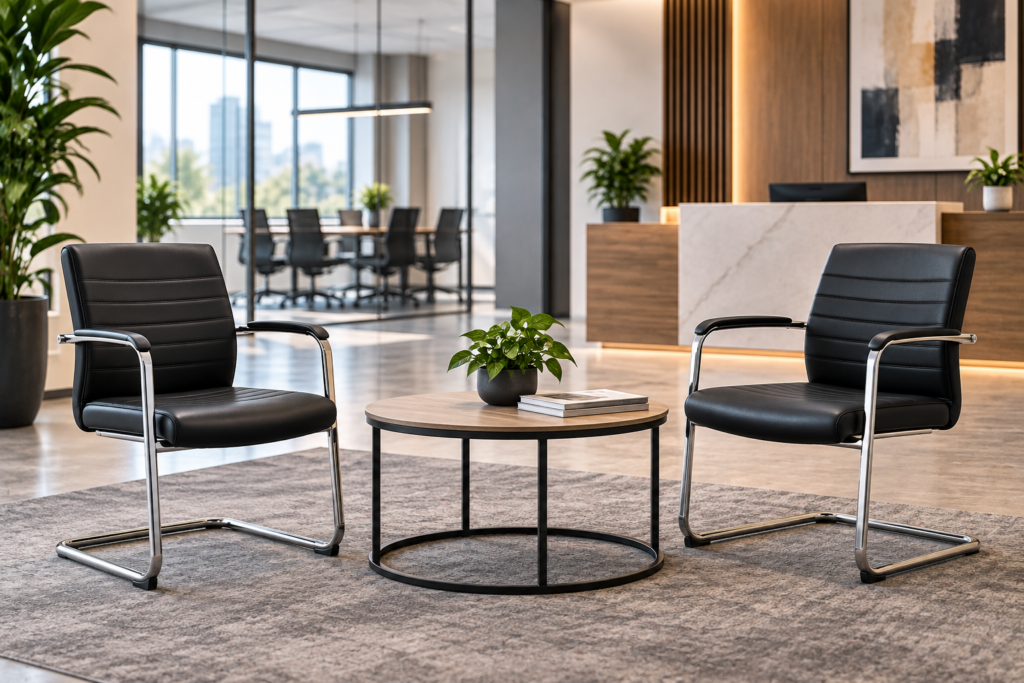
Visitor chairs are the seats you put anywhere a guest might land for a short time. Think reception, waiting areas, at the front of private offices, in interview rooms, or along circulation spaces where people pause briefly. Their job is simple, give visitors a comfortable, tidy place to sit without overcomplicating the space or your budget.
Key design focus, short term comfort, visual appeal, and practicality. Unlike task or meeting chairs, visitor chairs usually stay in one spot and support lighter, shorter use, so they do not need full ergonomic adjustability. What matters more is how they look in the context of your fitout and how they handle frequent in and out traffic.
Typical Design Characteristics
Most visitor chairs share a few common traits that make them work well in busy Australian offices:
- Simple sit down design, fixed height, often with a fixed back, sometimes with arms, so people can sit without fiddling with levers.
- Stable footprint, sled bases, 4 leg bases, or cantilever frames that feel solid when people sit, stand, or shift slightly.
- Compact proportions, so you can fit a sensible number of seats in a reception or waiting area without crowding circulation paths.
- Stackable or linkable options (where required), handy for training rooms, casual meeting zones, or multi purpose spaces that need fast reconfiguration.
Comfort for Short Term Seating
Visitor chairs are not meant for all day use, but they still need to feel good for that typical [insert duration] sit. Look for:
- Supportive seat foam, firm enough to hold shape, soft enough that visitors do not feel pressure points.
- Modest back support, a gentle curve that supports the lower back instead of a completely flat panel.
- Optional armrests, useful in reception and medical or professional settings where people appreciate the help standing up.
Style and Durability Considerations
Visitor chairs set the visual tone the moment someone walks into your office. You want them to align with your brand, not fight it. Common choices include:
- Upholstered seats and backs in fabric, vinyl, or leather look finishes that match your colour palette and feel welcoming.
- Timber or plastic shells for a cleaner, more minimal look that is easy to wipe down and maintain.
- Metal frames in neutral or accent colours that complement your workstation legs and other furniture.
For Australian workplaces, durability and hygiene are non negotiable. Focus on commercial grade frames, upholstery with [insert relevant rating] or similar, and finishes that handle regular cleaning without fading, cracking, or stretching. If your space has high visitor turnover, invest in chairs that are easy to wipe, quick to move, and simple to repair or reupholster when needed..
Understanding Meeting Chairs
Meeting chairs are the seats that carry the weight of longer conversations. Strategy sessions, client presentations, workshops, and long video calls all rely on these chairs to keep people focused instead of fidgeting. If visitor chairs are about first impressions, meeting chairs are about sustained comfort and support.
Core design focus, ergonomics, adjustability, and posture support over a longer sitting period. People may not be in them all day like a task chair, but they are often sitting for extended blocks of time. That changes what you should look for.
Ergonomics For Longer Sessions
A good meeting chair keeps people upright, supported, and alert. Poor chairs lead to slouching, back niggles, and distracted attendees who keep shifting around. For Australian boardrooms and project spaces, focus on:
- Backrest shape, a contoured back that follows the natural curve of the spine instead of a flat panel.
- Lumbar support, either a built in curve or adjustable support so people avoid that tired lower back slump at the [insert duration] mark.
- Seat depth and width, enough space so different body types can sit without feeling cramped or perched on the edge.
Adjustability Features That Matter
Not every meeting chair needs the full feature set of a task chair, but some adjustments make a big difference when different people are using the same room across the day.
- Seat height adjustment, so people can get their feet flat on the floor and knees at a comfortable angle relative to the table.
- Tilting or synchro mechanisms, allow a slight recline or dynamic movement so people can shift posture without losing support.
- Armrests, fixed or adjustable arms that fit under the table and give forearms a rest, which helps reduce shoulder and neck tension.
Where Meeting Chairs Belong And Why
Meeting chairs earn their keep in spaces where discussions run longer and concentration matters. Typical zones include:
- Conference rooms, where hybrid meetings, presentations, and workshops happen for extended blocks.
- Boardrooms, where comfort, presence, and a professional look all matter at the same time.
- Project and collaboration rooms, where teams sit, stand, move around, then sit back down again across multiple sessions.
When you get meeting chairs right, people stay engaged longer, meetings feel less draining, and visitors or executives notice the overall quality of the space. For an Australian office fitout, treat meeting chairs as long term working tools, not just matching pieces around a table. They will shape how productive your rooms feel every single day.
Key Differences Between Visitor Chairs and Meeting Chairs
Visitor chairs and meeting chairs might share a similar footprint, but they are built for different jobs. If you match the wrong chair to the wrong space, you either waste money on features no one uses or you frustrate people who sit for longer than the chair was designed to handle.
Comfort And Design Intent
Visitor chairs focus on short term comfort and visual impact. They support that typical [insert duration] sit in reception or a quick meeting in a private office. The design intent is simple, look inviting, feel comfortable enough, and avoid complicated adjustments.
Meeting chairs focus on longer sessions and posture. They are shaped and padded to support the body through extended meetings. You will usually see better lumbar support, more generous cushioning, and a backrest that encourages an upright, engaged posture rather than a lounge feel.
Functionality, Placement, And Use
Functionally, visitor chairs tend to be fixed height, often stackable, and easy to shift around for flexible spaces. They shine in reception, waiting rooms, interview rooms, and overflow seating where traffic is high but sitting time is shorter.
Meeting chairs usually offer height adjustment, tilt or recline, and arms that work with the meeting table height. They belong in conference rooms, boardrooms, training rooms, and collaboration spaces where people sit, think, and talk for longer stretches.
Price, Durability, And Practical Considerations
Because visitor chairs often have fewer moving parts, they typically come in at a lower price point per unit compared with a fully ergonomic meeting chair. They are a smart choice when you need volume seating across reception and waiting areas and you want something robust, stackable, and easy to clean.
.Meeting chairs cost more per seat, but they earn their place through better ergonomics, adjustability, and support. For Australian offices, this matters in rooms that get used heavily across the week. You protect your fitout spend by choosing chairs that keep people comfortable and last under frequent use.
Side By Side Comparison
|
Criteria |
Visitor Chairs |
Meeting Chairs |
|
Comfort level |
Short term comfort for brief visits |
Higher comfort for extended sessions |
|
Design intent |
First impressions, tidy appearance, simple sit |
Support, focus, and posture over longer periods |
|
Functionality |
Mostly fixed, often stackable, easy to move |
Adjustable height, tilt, and supportive backrest |
|
Typical placement |
Reception, waiting areas, guest seating in offices |
Conference rooms, boardrooms, training and project rooms |
|
Price considerations |
Lower cost per unit, good for higher quantities |
Higher cost per seat, better for focused, high use rooms |
Simple rule of thumb, use visitor chairs where people pass through, and invest in meeting chairs where people stay seated and need to concentrate.
Factors to Consider When Choosing Between Visitor Chairs and Meeting Chairs
When you are fitting out an office in Australia, the real question is not “visitor or meeting chair”, it is where, how long, and by who. Get clear on those, and the right chair type almost chooses itself.
1. Office Space Size And Layout
Start with the floor plan. In tight receptions or corridors, you need chairs with a compact footprint, possibly stackable, so you can clear space when needed. Visitor chairs usually win here.
In larger meeting rooms, you can afford a slightly larger chair with arms, a wheeled base, or a tilt mechanism. Just check the clearance around the table so people can push back without hitting walls or other furniture.
- Measure the depth from table edge to wall before choosing bulky meeting chairs.
- Use slimmer visitor chairs in narrow rooms or alongside circulation paths.
2. Expected Seating Duration
Match the chair to the typical sitting time, not the best case scenario.
- Short sits (up to around [insert duration]): visitor chairs with decent foam and a supportive back are fine.
- Medium to longer sessions: meeting chairs with proper lumbar support, seat height adjustment, and a slight recline reduce fatigue and fidgeting.
If a “meeting” space regularly turns into all morning workshops, treat it as a long duration room and prioritise meeting chairs.
3. Aesthetic Fit With Your Office Design
Your chairs should look like they belong to the same story as your workstations, storage, and finishes. For Australian offices, that often means:
- Visitor chairs that carry your reception look, with fabrics or shells that echo your brand colours or textures.
- Meeting chairs that feel a touch more refined, aligning with your boardroom table, joinery, and acoustic panels.
Use a consistent base colour across both types so the office feels cohesive as people move through different spaces.
4. Budget And Quantity
Think in zones, not just unit prices. Visitor chairs usually cost less per unit, but you may need more of them across reception, waiting areas, and guest seating. Meeting chairs cost more per seat, yet you often need fewer, focused in key rooms.
- Prioritise spend on meeting chairs in high use rooms where your team sits often.
- Choose robust, good value visitor chairs where volume matters more than advanced ergonomics.
5. Maintenance, Hygiene, And Longevity
Australian workplaces deal with regular cleaning cycles, food and coffee in meeting rooms, and varied visitor traffic.
Look for:
- Upholstery with [insert relevant rating] or similar that copes with frequent cleaning.
- Frames and shells that resist marking and are easy to wipe down.
- Stacking or nesting visitor chairs that store compactly when you reconfigure rooms.
For meeting chairs, pay attention to the quality of mechanisms and bases. Fewer moving parts on visitor chairs usually means lower maintenance, while well built adjustments on meeting chairs protect your investment over the life of the fitout.
Practical Tips for Integrating Visitor and Meeting Chairs in Office Fitouts
Once you understand what visitor and meeting chairs do, the next step is planning how they work together across your office. This is where layout, traffic flow, and the reality of day to day use in an Australian workplace matter more than catalogue photos.
1. Map Your Seating Zones First
Start with a simple plan of your floor. Mark where people arrive, wait, collaborate, focus, and present.
- Use meeting chairs around fixed meeting tables, in formal boardrooms, and in project rooms where people sit for longer blocks.
- Use visitor chairs in reception, touch down spaces, interview rooms, and as guest seating in private offices.
Look for grey areas, such as breakout spaces or training rooms. In these, consider stackable visitor chairs with better padding, or lighter meeting chairs that still offer basic adjustments.
2. Pair Chairs With The Right Tables And Surfaces
Chairs do not sit in isolation. They work with tables, storage, and technology.
- Reception and waiting, pair visitor chairs with lower coffee tables or side tables so visitors can use laptops, fill forms, or place drinks without awkward reaching.
- Meeting and boardrooms, match meeting chair seat height and arm height to the table thickness and leg design to avoid armrests clashing under the top.
- Small huddle rooms, consider fixed base meeting chairs or compact visitor chairs around smaller round tables to keep the room from feeling cramped..
A quick test, sit in a sample chair at a sample table and check knees, arms, and screen sightlines before you commit across the fitout.
3. Plan For Movement, Storage, And Flex Spaces
Most Australian offices now shift layouts for workshops, town halls, or events. Build that into your seating plan.
- Choose stackable visitor chairs for training rooms or multipurpose spaces, and allocate a storage area close by.
- Use meeting chairs on castors in rooms where people move between whiteboards,screens, and the table.
- Keep circulation paths clear by allowing enough space between chair backs and walls for people to pass behind a seated person.
This keeps your office looking ordered, instead of cluttered with “spare” chairs parked in every corner.
4. Balance Comfort And Professionalism In Each Space
Each zone should send a clear message about how it is used.
- Reception and client areas, lean into visitor chairs that look welcoming and match your brand finish, with firm enough cushioning that feels tidy rather than lounge like.
- Formal meeting rooms, use more supportive meeting chairs with consistent finishes so the room feels considered and focused.
- Creative or project spaces, mix lighter meeting chairs with a few informal visitor chairs or stools, as long as posture for longer sessions is covered.
If you walk from reception through to the boardroom and the chairs feel like one coherent family, you have nailed the integration.
Budgeting And Cost Considerations For Executive Office Chairs
Conclusion
Visitor chairs and meeting chairs might share the same floor, but they serve very different roles in your office fitout. Visitor chairs handle short stays, first impressions, and high traffic zones. Meeting chairs carry the longer sessions where focus, posture, and comfort start to matter a lot more.
If you remember nothing else, remember this, match the chair to the time spent sitting and the job that space needs to do. Reception, waiting rooms, and guest spots in private offices call for compact, durable visitor chairs that look sharp and clean easily. Boardrooms, conference rooms, and project spaces deserve proper meeting chairs with real support, not just a nicer visitor chair at a bigger table.
For Australian offices, there are a few consistent non negotiables. You need upholstery and finishes that handle frequent cleaning, frames and mechanisms that survive daily use, and options for stacking or easy movement where spaces need to flex. Get those right, then layer in the aesthetics so your seating feels like a natural part of your overall fitout, not an afterthought.
Before you order anything, run through a quick checklist for each space:
- How long do people typically sit here in one go, short, medium, or long sessions?
- Who uses this space most often, visitors, staff, or senior leaders?
- How tight is the footprint, and do chairs need to stack or store away?
- What level of ergonomic support is appropriate for the type of work happening?
- How often will these chairs be cleaned, and what finishes are practical for that?
- Does the chair style align with the rest of the fitout, or will it visually fight the space?
If you answer those honestly, the choice between visitor and meeting chairs becomes straightforward. You end up with a workplace that feels welcoming at the front door, professional in every client space, and genuinely comfortable in the rooms where your team spends serious time working.
You do not need to guess. Take the time now to map your zones, define sitting durations, and decide where visitor chairs make sense and where meeting chairs will pay off. That bit of upfront thinking will save you from years of quiet frustration every time someone sits down for a meeting that feels longer than the chair can handle.
